The Difference Between a Chatbot and an Agent
If you’ve only ever used AI as a chat box, you’ve only seen about a third of what it can do.
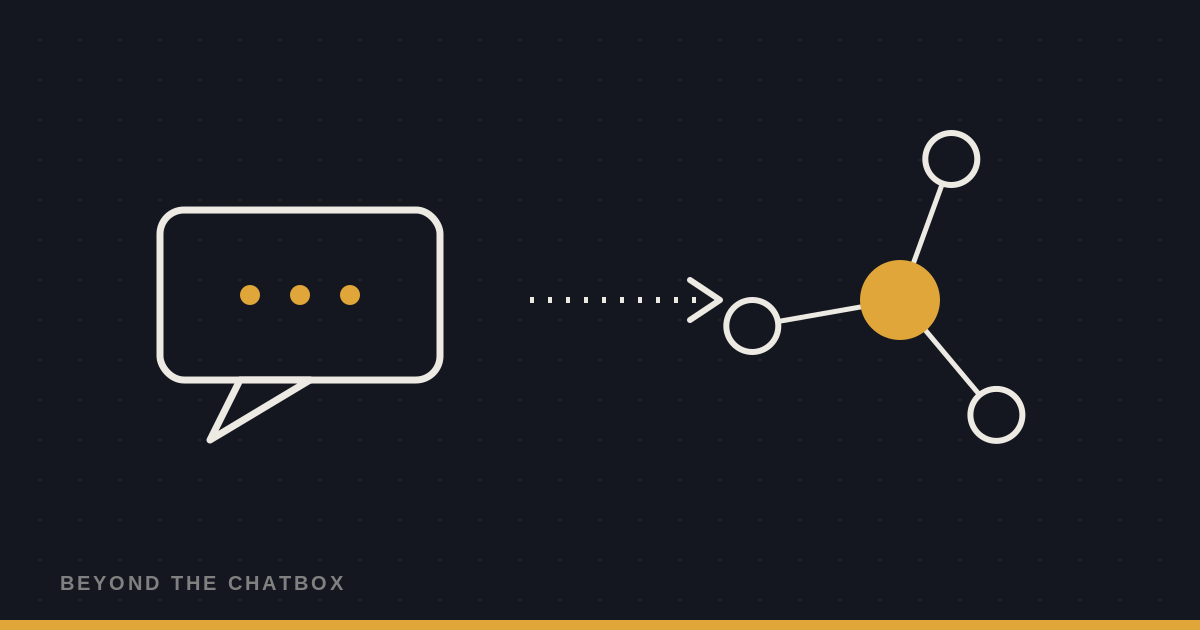
That’s not a knock on chatbots. Typing a question and getting a good answer back is genuinely useful. It’s probably what most people picture when they hear “AI” at all. But it’s the most limited version of what these systems can do. Somewhere between “chatbot” and “agent,” AI stops being a very smart autocomplete and starts acting more like a coworker, one you can hand a goal to and walk away from.
Here’s the gap, and why it matters more than the marketing around it suggests.
What a chatbot actually does
A chatbot’s job is narrow, even when the conversation feels expansive: read your message, generate a response. It has no way to act in the world, because it wasn’t built to. Ask it to summarize a document, it summarizes what you pasted in. Ask it to draft an email, it hands you text and stops there. Whether you actually send that email is on you.
Read, reason, reply. That’s the whole loop. Everything after belongs to you.
That’s fine for a lot of tasks, honestly. But it makes the chatbot more of a reference tool than an assistant, closer to a very articulate search engine or a tutor. It can tell you how to do something. It can’t do it.
What an agent does differently
An agent has tools, and it’s allowed to use them without checking in at every step.
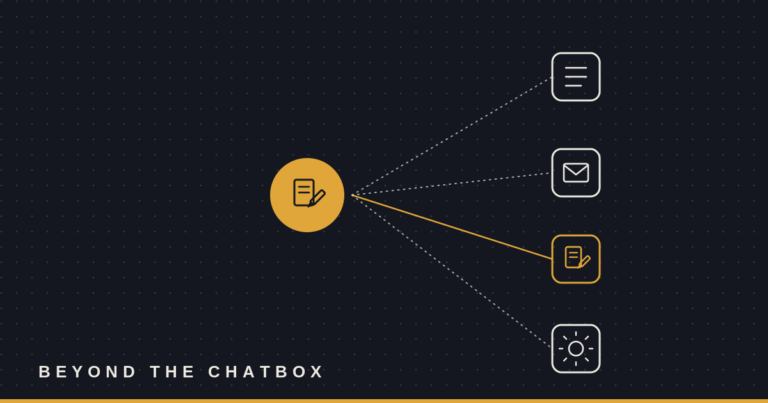
So instead of describing what a file should say, it opens the file, edits it, and saves it. Instead of explaining how to check your calendar for conflicts, it checks the calendar, finds the conflict, and proposes three new times. Instead of guessing what your inbox looks like this morning, it reads the inbox, decides what’s urgent, drafts replies to the routine stuff, and flags what actually needs your judgment.
The technical name for this is “tool use.” The AI gets a defined set of actions it’s allowed to take (read a file, hit an API, click a button, query a database) and decides for itself which ones to use and in what order, based on the goal you gave it. Tell it “find our Q3 numbers and put together a one-page summary,” and a well-built agent won’t ask where the numbers live. It’ll go look, open the right spreadsheet, pull the figures, and hand you the summary. It only comes back to you when it hits something genuinely ambiguous, like a file name that could mean two different things, or a number that doesn’t add up.
A chatbot resolves one exchange. An agent resolves a task, and that task might take five rounds of reading, deciding, and acting that you never had to narrate.
A concrete example
A customer emails support: “I got sent the wrong color, I want a refund.”
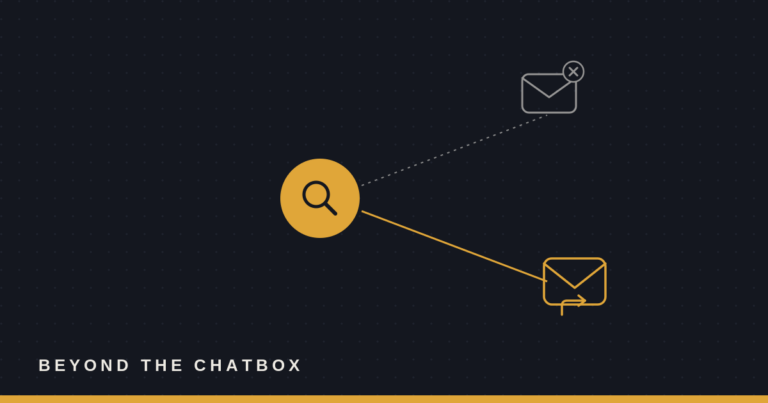
A chatbot matches that message to the closest FAQ entry and sends back a link to the returns policy and a form. It never touches the order. It never confirms anything is actually wrong. Technically it responded, but nothing got resolved. Somebody still has to fill out that form, and somebody downstream still has to process it.
An agent looks up the order, confirms the item that shipped doesn’t match what was ordered, checks that it qualifies under the refund policy, issues the refund in the store’s backend, sends a confirmation, and closes the ticket. No form. Nothing left for anyone downstream to do.
Same email in both cases. Wildly different amount of work done by the time it’s over. That’s deflection versus resolution, and it’s the cleanest way I know to explain what “taking action” is actually worth.
Why the label gets slippery
Nearly every AI product on the market calls itself “agentic” right now. Most of them aren’t, at least not in any way that holds up architecturally. Gartner looked into this and it wasn’t close: out of thousands of vendors using the term, something like 130 are verifiably agentic once you look past the branding. Everyone else is a chatbot with a new label on the box.
The tell is autonomy over multiple steps that actually have consequences. If a system only reads information and hands you a suggestion, it’s a chatbot, no matter how conversational it sounds. If it reads, picks between paths based on what it finds, and then writes or acts on the result (updates a record, sends something, moves money, edits a file), that’s agentic work. The question isn’t how natural the conversation feels. It’s whether anything in the world actually changed because of it.
This matters because the failure modes are completely different. A chatbot that’s wrong wastes your time. An agent that’s wrong might send the wrong email, delete the wrong file, or refund something it shouldn’t have. Agents are worth the upside, but that’s also exactly why people are slower to hand them the keys.
Where the real line is
Agents aren’t just chatbots with buttons attached. What matters isn’t that the AI can click things, it’s that it decides when and how to click them based on a goal, not a script somebody wrote ahead of time. A Zapier-style automation also reads data and takes action, but a human predetermined every step of it. An agent gets handed the goal and figures out the steps itself, adjusting on the fly when something doesn’t go as planned.
That’s why “agent” isn’t really a switch you flip on or off. It’s a spectrum. A chatbot with one tool bolted on, say it can search the web and nothing else, sits closer to the chatbot end. Something that can read your files, write to them, check your calendar, send messages, and chain all of that toward a goal, checking in only at real decision points, sits much further out. Most products live somewhere in the middle. Worth asking, for whatever tool you’re using, where on that line it actually sits instead of trusting whatever the label says.
Why any of this is worth caring about
If your only mental model for AI is “I ask, it answers,” you’ll keep running into that ceiling, using AI to describe work instead of actually doing it. Start thinking in terms of goals and tools instead of questions and answers, and a much bigger set of tasks opens up. Not “how do I reconcile these two spreadsheets” but “reconcile them and tell me what doesn’t match.” Not “what should this email say” but “draft it, and go find whatever you need first.”
That shift, from asking to delegating, is really the whole premise of this site. Chatbots answer questions. Agents get things done. Most of what we write about here is going to live in that second category.