It’s Also Counting What It Already Quoted
Ask an agent to help you work through a long article, one section at a time, and each answer on its own looks completely fine. One quote, a short one, properly attributed. Ask again about the next section, same thing. By the fifth or sixth exchange, you’ve technically never broken a single rule in any one reply. You’ve also, between all of them, walked away with a big chunk of somebody else’s writing.
That’s the gap a simple per-response rule doesn’t cover on its own, and it’s why the actual limit isn’t scoped to a single reply. It’s scoped to the conversation.
What the limit actually says
When an agent pulls from something it read rather than something it wrote, a web page, an article, a document someone shared, there’s a specific ceiling on how much of the original can come back out: at most one quote per response, under fifteen words, in quotation marks, with attribution to where it came from. Anything longer than that gets paraphrased instead of quoted. A summary has to be substantially shorter than the source and written differently, not a lightly reworded pass over the same sentences in the same order.
Creative work gets a stricter version of the same idea. Song lyrics don’t get reproduced at all, in whole or in part, not even the one line someone swears is “just the hook.” Poems and passages from books work the same way. Once that line’s been drawn once in a conversation, it stays drawn. Asking again with slightly different wording doesn’t reopen it.
Both versions of the rule exist for the same reason: a fifteen-word quote with a citation is commentary. A convincing paraphrase of an entire article, or a lyric reproduced “just this once,” isn’t commentary anymore. It’s a copy with a nicer font.
The part that resets, and the part that doesn’t
Here’s where it gets less obvious. “One quote per response” reads like a budget that refills every time you ask a new question, and in a narrow sense it does; nothing stops a fifth reply from including its own fifteen-word quote. But the rule underneath that one doesn’t reset: don’t reconstruct a work from excerpts across responses. That line only makes sense if something is keeping track across the whole conversation, not just checking the message currently being drafted.
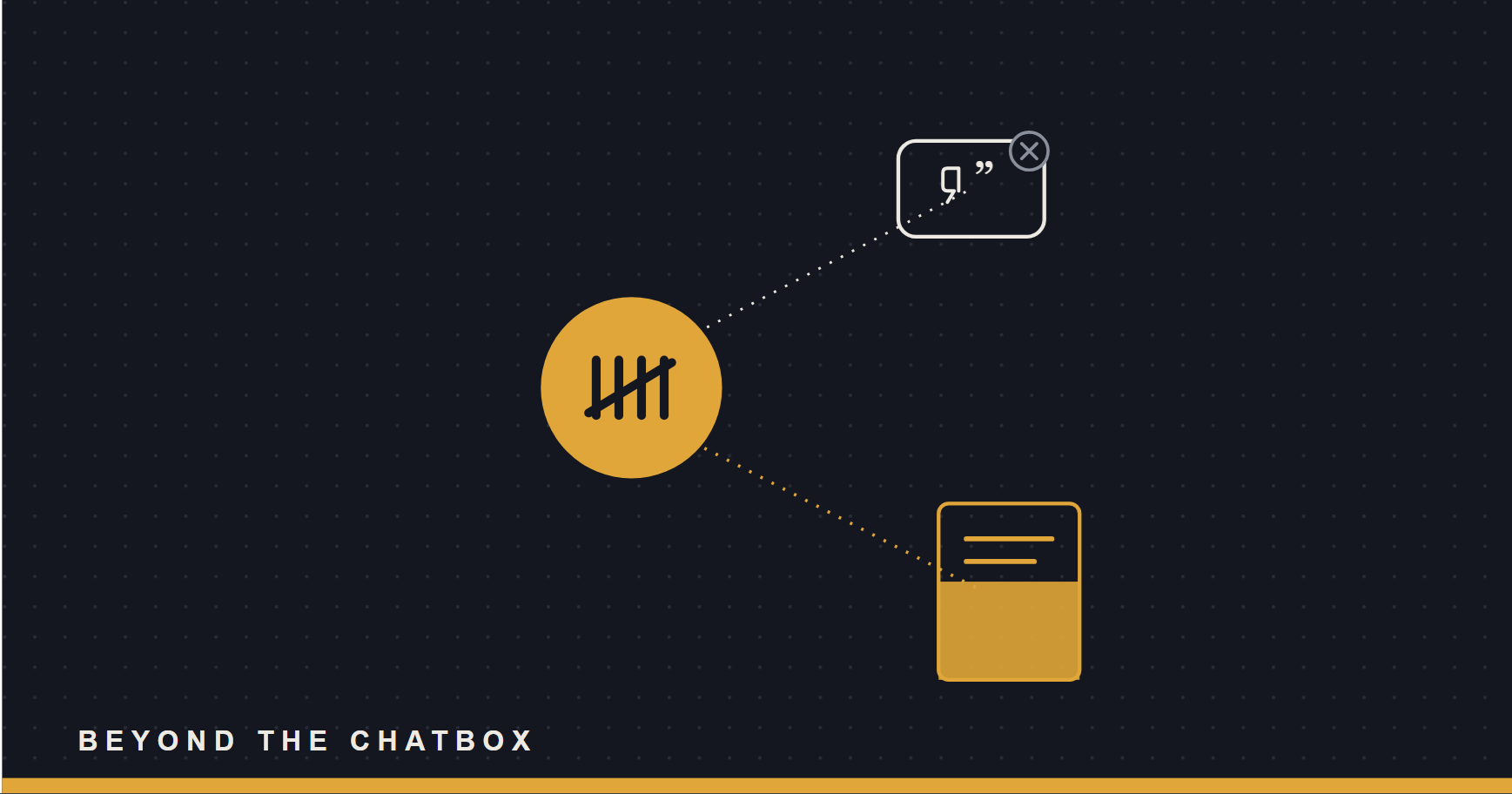
Picture the article-by-article walkthrough again. Five replies, one compliant quote each, feels like five separate, small, defensible decisions. Strung together in order, though, those five quotes might land on five consecutive paragraphs of the same piece, which stops being commentary and starts being a serviceable draft of the original. The rule that catches this can’t just ask “is this one quote too long?” It has to ask “what have I already pulled from this exact source earlier in this conversation, and does adding this one tip it over?”
That’s a fundamentally different kind of check. A per-message limit is stateless: look at the draft in front of you, count the words, done. A per-conversation limit needs memory: what source, what’s already been quoted from it, how far into reconstructing it does the running total go. The second one is harder to get right, and it’s also the one that actually matters, because the first one alone would wave through exactly the slow, incremental copy this whole rule is supposed to prevent.
Why this matters
A single short quote with attribution was never the risk anyone was worried about. The risk was always the version where nobody breaks the rule in any one moment, and the source still ends up copied, just spread thin enough across a conversation that no individual reply looks like the problem. Treating the limit as something the conversation carries, instead of something each reply resets on its own, is the difference between a rule that sounds strict and one that’s actually doing its job.