A Plugin Is a Skill With Friends
Install one skill and you’ve taught Claude a single habit. Install a plugin and you’ve handed it a whole job description.
That’s the short version of what’s different here, but it’s worth slowing down, because “plugin” gets used loosely enough that people assume it’s just a bigger skill, or a fancier connector. It’s neither. It’s a package that can hold several kinds of capability at once, built so someone else’s work becomes your starting point instead of something you rebuild from scratch.
What’s actually in the box
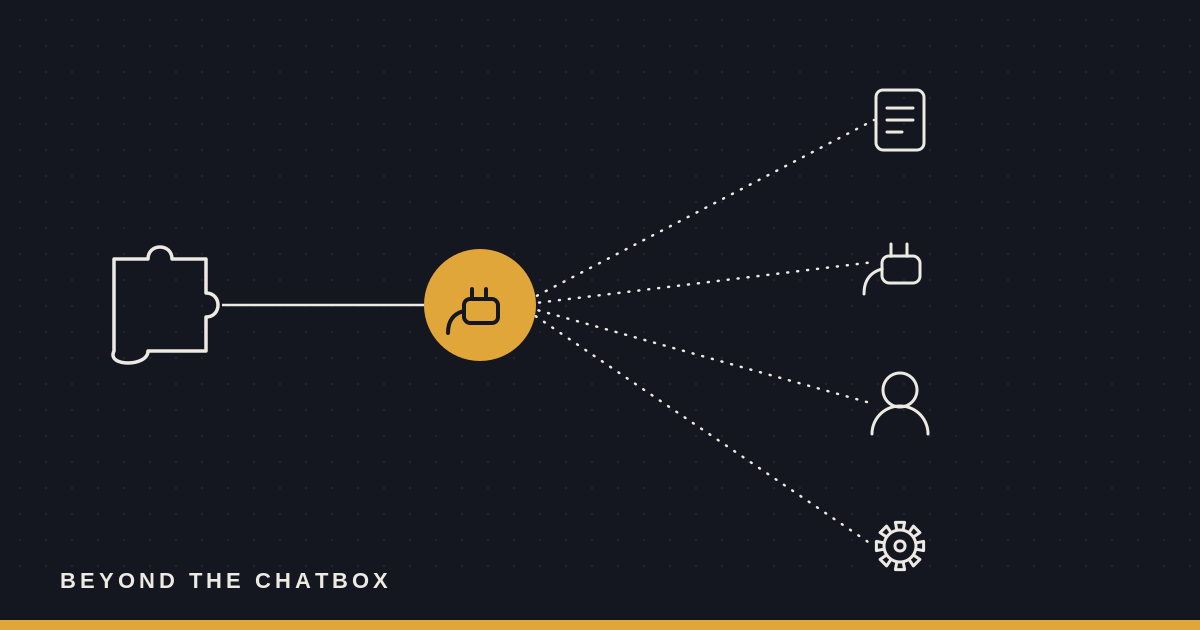
A plugin’s manifest can declare any combination of four things. Skills are the reusable instructions we’ve covered before, the saved “here’s how I want this done” that Claude reads instead of you retyping it. Connectors are MCP servers, the pipes that let Claude actually reach an outside service like a CRM or a shared drive instead of just talking about it. Agents are specialized subagents Claude can hand off a narrow piece of work to. Hooks are scripts that fire automatically at defined points in a session, the kind of thing that runs a check before Claude finishes a task without anyone having to remember to ask for it.
Any one of those on its own is useful. A plugin is what happens when someone bundles the ones that belong together and ships them as a single install.
Why that’s different from building it yourself
Say you want Claude to work like a decent sales rep: pull context from the CRM, follow your actual sales process, have a command ready for prospect research and another for call follow-ups. You could build every piece of that separately. Write the skill for how you want call notes formatted. Set up the CRM connector and get the auth right. Define a subagent for the research legwork. Test it, fix what’s off, repeat for the next rep on the team who wants the same thing but has to redo all of it themselves because none of it lives anywhere shared.
A plugin skips the reassembly. Someone builds the sales plugin once, connectors and skills and commands all wired to work together, and everyone who installs it gets the same starting point. You’re not copying a prompt from a teammate and hoping you got the phrasing right. You’re installing the actual thing they built, then adjusting it if your process differs from theirs.
Where they come from
Plugins show up in three ways. There’s a marketplace, Anthropic’s official catalog by default, though a team can point Cowork at its own Git repository and use that as a private marketplace instead, which is how most companies end up distributing the plugins they build in-house. There’s uploading a plugin file directly if someone just hands you the package. And there’s building your own, since a plugin is nothing more than files on a manifest, no different in kind from writing a skill, just more of them working together.
Once it’s installed, you’re not stuck with the whole bundle as one indivisible unit. Open it up and you’ll see its skills and agents as separate tabs, its connectors and hooks on their own pages, and you can turn off the one piece you don’t want without losing the rest.
The part worth watching
Two things are worth knowing before you lean on a plugin for real work. First, if your organization requires certain plugins, they install automatically and you can’t remove them, which is a fair trade for consistency but means you should actually go look at what’s in a required plugin rather than assuming it’s just background noise. Second, if you’ve edited a plugin’s files yourself and an update comes through from the marketplace, Cowork flags the conflict before letting the update overwrite your changes. That’s the difference between a plugin that’s a living, shared thing and one that quietly clobbers the tweaks you made last week.
Why this matters
The whole shift this site keeps circling back to is delegation instead of asking: handing Claude a goal instead of narrating every step. A skill is one small piece of that, a single habit taught once. A plugin is the same idea scaled up to a role, everything one person or one team needs Claude to know and reach for, packaged so the next person doesn’t start from zero. Install a skill and you’ve saved yourself some retyping. Install a plugin and you’ve onboarded Claude to your entire job.